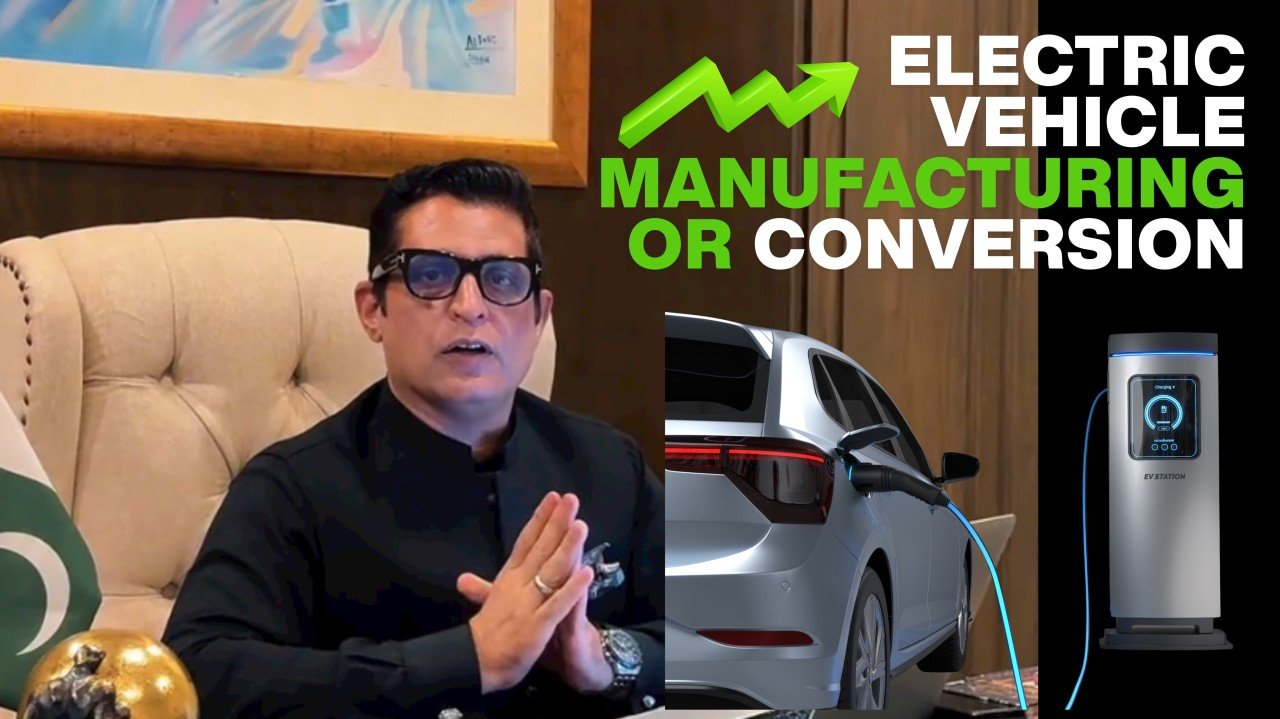
The future of transportation in Pakistan may not begin with luxury EVs.
It may begin with a simple, affordable electric car that finally puts safe four-wheel mobility within reach of every family.
Pakistan’s automotive industry may be standing at the beginning of its most significant transformation in decades.
Reports suggest that a fully homegrown electric vehicle developed in Lahore could enter the market by June or July 2026 at a price below Rs 1 million. If this target is achieved, it would become one of the most affordable four-wheelers ever introduced in Pakistan and could fundamentally reshape personal mobility for millions of people.
With an estimated driving range of 180–200 kilometers per charge, such a vehicle has the potential to create an entirely new market segment. For decades, motorcycles have been the primary mode of transport for middle and lower-income families. An affordable electric car could provide a safer, more comfortable, and weather-protected alternative while maintaining low operating costs.
While other compact EVs such as Alektra Metro, Nora, and BAW Pony are also entering the market, the real disruption lies in achieving a price point between Rs 1 million and Rs 1.5 million. This is where mass adoption becomes possible.
The Gap Nobody Is Talking About
Most discussions around electric vehicles focus on premium products and high-end technology. However, Pakistan’s biggest opportunity lies in affordable mobility.
There is a massive gap in the market for economical four-wheel transportation. Millions of motorcycle owners aspire to upgrade to a car but remain priced out of the market. A reliable, practical EV in the Rs 1–1.5 million range could unlock demand on an unprecedented scale.
The question is no longer whether EVs will come to Pakistan. The question is whether manufacturers can build products that address the needs of the country’s largest customer segment.
Why EV Manufacturing May Be Easier Than Traditional Vehicles
From a manufacturing perspective, electric vehicles offer several advantages compared to conventional internal combustion engine (ICE) vehicles.
EVs have:
- Fewer moving parts
- Simpler drivetrains
- Reduced mechanical complexity
- Lower maintenance requirements
- Easier assembly processes
This creates opportunities for local engineering talent, startups, and automotive entrepreneurs to develop innovative solutions with lower barriers to entry than traditional vehicle manufacturing.
As battery technology becomes more accessible and local supply chains mature, Pakistan could witness the emergence of new automotive companies focused entirely on electric mobility.
The Hidden Opportunity: EV Conversions
While new EV manufacturing attracts most of the headlines, an equally exciting opportunity may exist in converting existing petrol and diesel vehicles into electric vehicles.
Pakistan has millions of vehicles currently on the road. Replacing them all with new EVs will take decades. However, converting selected vehicles to electric power could offer a practical and affordable alternative.
Potential benefits include:
- Lower conversion costs compared to buying a new vehicle
- Reduced fuel expenses
- Lower maintenance costs
- Extended vehicle lifespan
- Reduced environmental impact
For workshops, engineering companies, and automotive entrepreneurs, EV conversion could become an entirely new industry with significant growth potential.
What Will Determine Success?
Affordable EVs alone will not guarantee market adoption.
The ecosystem must include:
- Reliable charging infrastructure
- Strong battery warranties
- Affordable financing options
- Nationwide service networks
- Availability of spare parts
- Skilled technicians and training programs
Customers need confidence that ownership will be convenient, economical, and sustainable over the long term.
The Bigger Picture
Affordable mobility is about much more than selling cars.
It is about improving road safety for families currently dependent on motorcycles. It is about reducing transportation costs. It is about supporting local manufacturing, creating jobs, and accelerating technological innovation.
If Pakistan can successfully develop affordable electric vehicles and build a supporting ecosystem, the country could unlock a mobility revolution that benefits millions of citizens.
The future of transportation in Pakistan may not begin with luxury EVs.
It may begin with a simple, affordable electric car that finally puts safe four-wheel mobility within reach of every family.