Pakistan’s Automotive Industry at a Turning Point: 87% of Upcoming Vehicle Launches Are Electrified
Pakistan’s automotive sector appears to be entering one of the most significant transitions in its history.
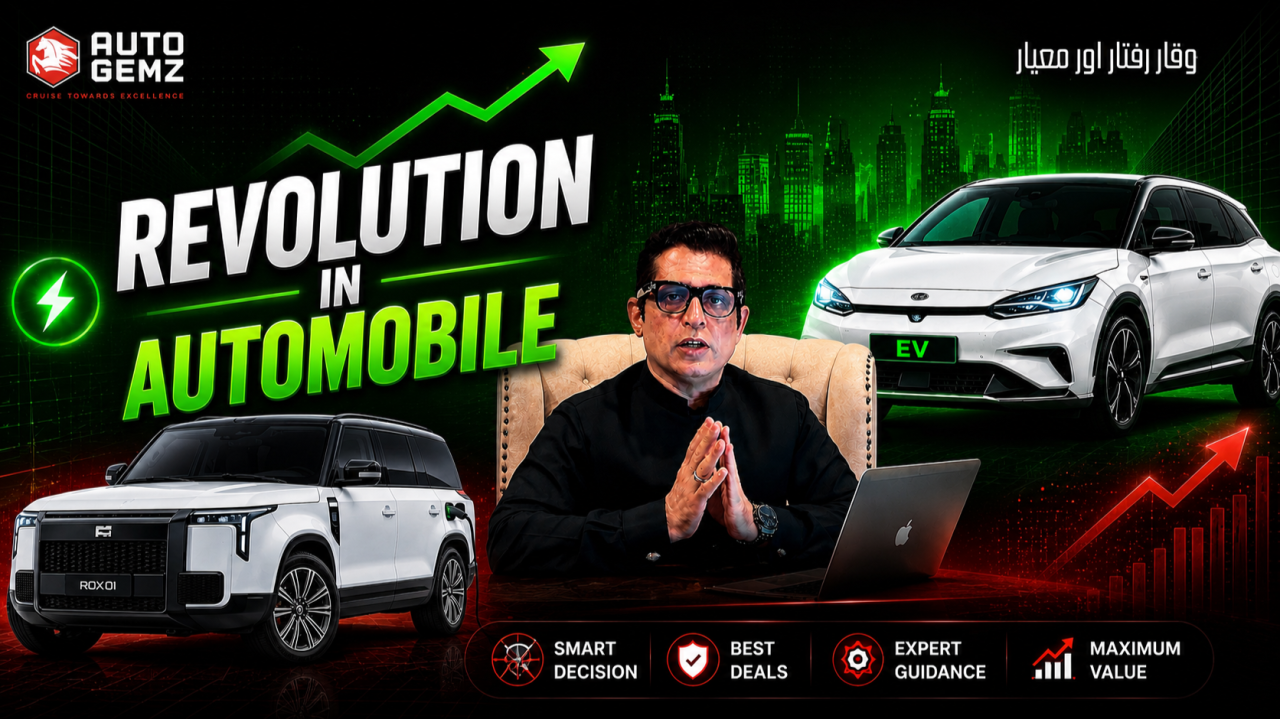
According to industry data compiled by Arif Habib Limited (AHL), 23 new vehicle models are expected to be launched between June and December 2026. What makes this particularly noteworthy is that nearly 87% of these upcoming models are electrified vehicles.
The planned launches include:
- 9 Fully Electric Vehicles (EVs)
- 11 Plug-in Hybrid Electric Vehicles (PHEVs) or Range-Extended Electric Vehicles (REEVs)
- Only 3 Conventional Internal Combustion Engine (ICE) Vehicles
These numbers clearly indicate that automotive manufacturers are positioning themselves for an electrified future.
A Strategic Shift, Not Just a Product Shift
The significance of these launches extends beyond introducing new models into the market. It reflects a broader strategic shift in how manufacturers view the future of mobility in Pakistan.
Globally, the automotive industry is undergoing rapid transformation driven by:
- Environmental concerns and emission regulations
- Advancements in battery technology
- Improvements in vehicle efficiency
- Changing consumer preferences
- Long-term energy diversification strategies
Pakistan is now beginning to witness this global transition at a more visible scale.
Electrification Is Not a Single Technology
One common misconception is that the future belongs exclusively to fully electric vehicles. In reality, the upcoming product mix demonstrates a diversified approach.
Manufacturers are introducing:
- Battery Electric Vehicles (BEVs)
- Plug-in Hybrid Electric Vehicles (PHEVs)
- Range-Extended Electric Vehicles (REEVs)
This diversified portfolio recognizes that different customer segments have different requirements regarding driving patterns, charging access, affordability, and range expectations.
The companies that succeed may not necessarily be those offering a single solution but rather those capable of providing flexible mobility options aligned with market realities.
Challenges Remain
While the product pipeline is encouraging, several challenges must still be addressed to accelerate adoption:
Infrastructure Development
Charging networks need to expand significantly to support growing EV ownership.
Policy Consistency
Investors and manufacturers require predictable long-term policies regarding taxation, incentives, and localization.
Affordability
The success of electrification will depend heavily on making these technologies accessible to a broader consumer base.
Supply Chain Readiness
Localization of components, battery technologies, after-sales support, and technical expertise will play a critical role.
Energy Ecosystem
Vehicle electrification cannot be viewed in isolation. Grid readiness, renewable energy integration, and energy storage solutions will be equally important.
The Real Game Changer: Energy Storage
While vehicles often receive most of the attention, the true revolution may come from advancements in battery and energy storage technologies.
As storage systems become:
- More efficient
- More affordable
- Faster charging
- Longer lasting
The barriers to EV adoption will continue to decline.
The next breakthrough in battery technology could have a far greater impact on the automotive industry than any individual vehicle launch.
Looking Ahead
The statistic that 87% of upcoming launches are electrified sends a strong signal about where the industry believes the future lies.
However, the future is unlikely to be defined by EVs alone. It will be shaped by an ecosystem that combines technology, infrastructure, policy support, energy solutions, and customer-centric innovation.
Pakistan’s automotive market is entering a new chapter. The coming years will reveal how quickly consumers, manufacturers, policymakers, and supporting industries can adapt to this evolving landscape.
One thing is becoming increasingly clear: electrification is no longer a distant possibility—it is already arriving in the marketplace.